Community Blog page- Katy Texas


Degenerative Disc Disease In Dogs: Symptoms, Causes, & Treatments
Degenerative disc disease in dogs is a medical condition that causes spinal pain. Subsequently, the disorder can cause dogs to become reluctant to move around.
Technically, the condition is caused by problems with a pup's spinal discs. Generally, symptoms including pain and swelling can occur. Unfortunately, certain dog breeds seem to be predisposed to the condition. For example, Cocker Spaniels, Poodles, and Dachshunds all suffer from the disease more than usual.
If you see signs that your dog might be suffering from degenerative disc disease, then you must consult your veterinarian for a proper diagnosis and course of treatment. Here's what you should know about the symptoms, causes, and treatments of degenerative disc disease in dogs.
Symptoms of degenerative disc disease in dogsThe condition in dogs can result in a range of symptoms. Generally, a dog's movement is affected.
ADVERTISEMENT
Advertisement
Specifically, some of the most common symptoms include:
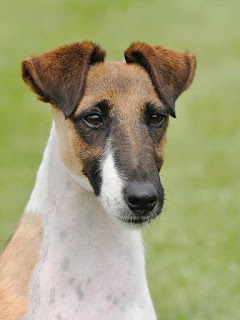
Causes of degenerative disc disease in dogs(Photo credit: Lourdes Balduque / Getty Images)
The cause of the condition is a problem with a dog's spinal discs. Technically, these discs are a sort of tissue that's found between the bones of a canine's spine.
Generally, when a dog's spinal discs degenerate, they cannot provide any cushioning between the spine bones. For instance, this can cause pain and swelling and subsequent mobility issues for a dog. Additionally, certain breeds of dog seem to suffer from the disorder more than usual. For example, some of those breeds include:
Treatments for the condition in dogsIf you think that your dog might be developing degenerative disc disease, your veterinarian will want to carry out a full physical examination of your dog. Special attention will be paid to your pup's back and neck. Additionally, your vet will ask about your dog's full medical history. This will include any breed-specific problems.
Generally, treatment focuses on managing your dog's symptoms. For example, anti-inflammatory medication can be prescribed for early cases of the disease. Additionally, physical therapy can help the condition. Your vet will recommend an appropriate physical therapist for your dog's needs.
However, sometimes surgery is needed to treat severe cases of the condition. Technically, this process removes parts of a spinal disc. In turn, this reduces the pressure on a dog's spinal cord.
Lundehund Syndrome in Dogs: Symptoms, Causes, & TreatmentsDog Health
Hemivertebrae in Dogs: Symptoms, Causes, & TreatmentsDog Health
Distemper in Dogs: Symptoms, Causes, & TreatmentsDog Health
Degenerative Disc Disease in Dogs: Symptoms, Causes, & TreatmentsDog Health
Episodic Falling Syndrome in Dogs: Symptoms, Causes, & TreatmentsDog Health
Cystinuria in Dogs: Symptoms, Causes, & TreatmentsDog Health
Docusate Sodium For Dogs: Uses, Dosage, & Side EffectsDog Health Read more
The post Degenerative Disc Disease in Dogs: Symptoms, Causes, & Treatments appeared first on DogTime.
View comments
Herniated Disc Directory
A herniated disc occurs when the spongy, soft material that cushions the bones of the spine (vertebrae) slips out of place or becomes damaged. You can have a herniated disc in any part of your spine. When a herniated disc presses on a nerve, it can cause pain, numbness, and weakness in the area of the body where the nerve travels. Follow the links below to find WebMD's comprehensive coverage about herniated discs, what a herniated disc looks like, how to treat it, and much more.
Medical Reference View All Features Video Slideshows & Images News Archive View AllHerniated Discs
 Herniated discs
By Dr. Robert G. WatkinsPGA, Member of Professional Team Physicians
The spinal disc is a round, multi-layered ligament that connects two vertebral bones together. The fibers of each of the layers are crossed like a basket weave and are at different angles to provide strength and support. Additionally, it has a type of hydraulic center that serves as a shock absorber.
The disc's main function is as a ligament, just like the ACL (anterior cruciate ligament) in the knee or the rotator cuff in the shoulder. It is a key part of each of the joints in your back. Each level in the back is a different joint. L4-5 in your back is a joint just like your knee or your shoulder. Herniated discs are joint injuries.
The most common cause of a herniated disc is a twisting type of injury. It can be caused by a fall or lifting something heavy. Compression injuries can cause herniation but predominantly it is twisting that leads to this type of injury.
A disc becomes herniated when you tear the annulus, the basket-weave-type supporting structure of the disc, by twisting. This weakens the structure and makes it work abnormally. A herniation is when you have a "blowout" of the annulus. The inner layers of the annulus break off and come out through the tear. A piece of the annulus of the disc itself ends up in the spinal canal.
SYMPTOMSMost herniated discs start with a tear in the annulus of the disc and a patient will experience severe back pain and spasm. As the tear increases in size or as the piece on the inside of the disc extrudes out of the disc into the spinal canal, the back pain will decrease. Then the patient may experience leg pain, weakness, numbness, and sciatica depending upon which nerve the fragment is pressing upon.
TREATMENTThe initial non-operative treatment that we use for herniated discs is to first reduce the inflammation. We do that with non-steroidal anti-inflammatory medications (such as aspirin, ibuprofen, or naproxen), short-term doses of anti-inflammatory steroids, or through epidural injections where an anti-inflammatory steroid is injected into the spinal canal or around the irritated nerve.
The second step in a non-operative treatment plan is to begin a very specifically designed back rehabilitation program called a trunk stabilization. Through this program, the disc can heal; the disc fragment can be pushed away from the nerve; the body can produce a membrane that covers the fragment; the nerve can change shape; and people can get well from a disc herniation non-operatively some of the time.
The way to assess a non-operative vs. A surgical treatment plan is by using the size of the fragment and other clinical findings. Sometimes the pain is just too intense. We operate very early on some disc herniations because of the combination of pain and weakness. It's usually a minimally invasive microscopic discectomy or endoscopic procedure that protects the normal tissue as much as possible and makes it more meaningful for rehabilitation purposes as well. Once surgery is complete, the patient starts a trunk strengthening program as soon as seven to ten days after the operation.
Athletes have been sent back to just about every position in every sport after a microscopic discectomy, which is the name of the common operative procedure for a herniated disc. The prognosis is excellent.
The key is the rehabilitation program. If we do a microscopic discectomy on an athlete, the basic plan is that at an appropriate time after surgery, the patient starts the stabilization program. This is a five-step, progressively more difficult rehabilitation process. For a professional athlete to return to action he has to effectively, and with excellent technique, progress through the Level 5 exercises. If he cannot perform Level 5 exercises, return to the game is postponed.
After completing the Level 5 exercises, patients do a series of sports-specific exercises. These are designed to take the rehabilitation program onto the field. For example, we have hooked a resistant cord to the trunk of a tennis player and had him serve and volley against the resistance. This can wake his back muscles up while also initiating the aerobic conditioning that the athlete may have lost during rehabilitation.
PREVENTIONEvery strength and conditioning coach who works with athletes has some sort of trunk or core strengthening type of program that varies according to the sport. We have done research with baseball players and professional golfers that shows the role of coordinated trunk strength is a vital part of athletic performance and prevention of back injuries. Remember that most back injuries can be successfully treated without surgery. Even when surgery is required, the athlete often returns to the same level of athletic activities.
Disclaimer:The information, including opinions and recommendations, contained in this website is for educational purposes only. Such information is not intended to be a substitute for professional medical advice, diagnosis or treatment. No one should act upon any information provided in this website without first seeking medical advice from a qualified medical physician.
Comments
Post a Comment