Why Washington state wants to spend millions building bridges for cougars - Fast Company
Not only will the structures help animals access food and new habitats, they'll create safe passage for cougars (M) seeking cougars (F).

There are few barriers that humans can't cross. We can fly across the ocean, burrow a tunnel through a mountain, and build a bridge over a river. The world belongs to us—or so we've convinced ourselves, at the expense of all the animals that came before us.
For decades, the Olympic Peninsula, a vast stretch of land across the Puget Sound from Seattle, has been cut off from the mainland by Interstate 5, severing connectivity and causing deaths from car strikes for thousands of animals in the Pacific Northwest.
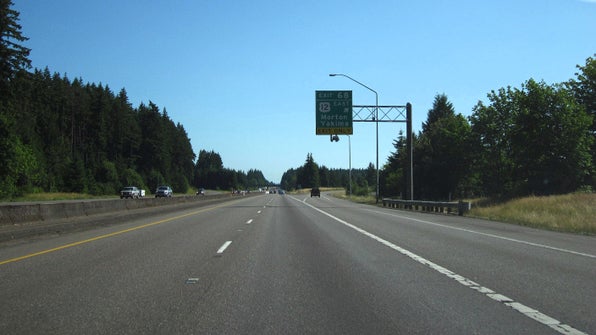
The project isn't without precedent: more than 26 structures are currently under way along Washington's I-90, which cuts through the Cascade mountains. And in California's Santa Monica mountains, the world's largest wildlife bridge is about to break ground in the spring. In total, America's four million mile road network is dotted with about 1,000 wildlife crossings. That number is about to grow with Biden's infrastructure bill, which has earmarked $350 million toward animal-friendly infrastructure like bridges and underpasses. It's a tiny sum, and though it remains unclear where the money will be directed, for the Olympic Cougar Project, it's a promising step in the right direction.
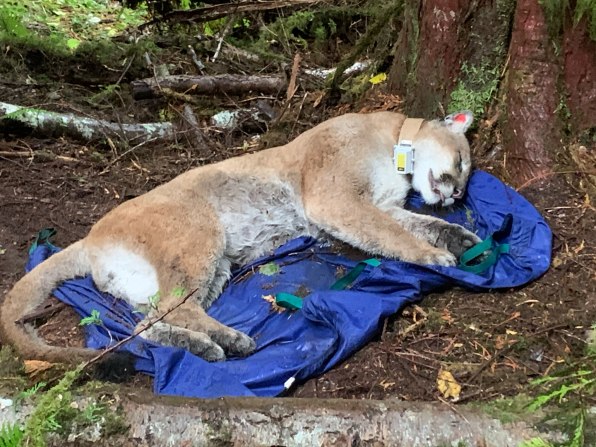
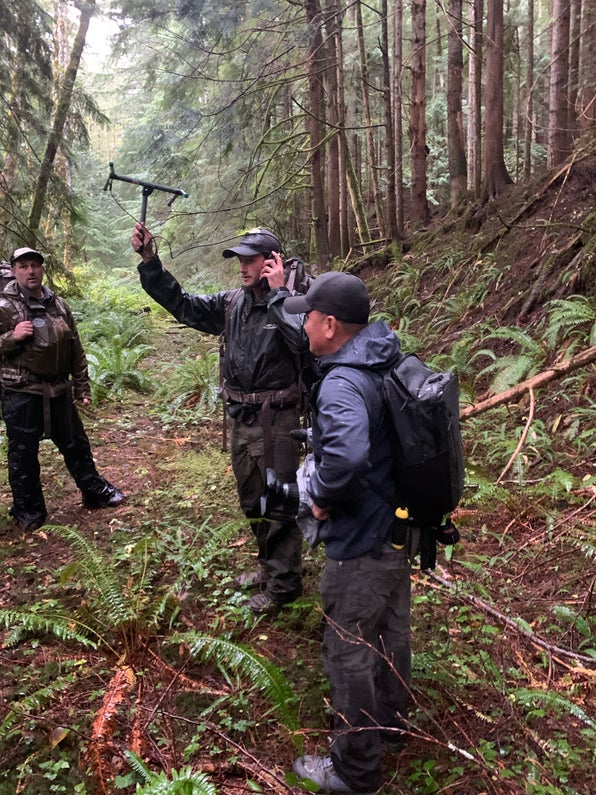
The project is a collaborative effort like no other. It is co-led by Panthera, a nonprofit that wants to preserve big cats and their surrounding ecosystems, and the Lower Elwha Klallam Tribe. Both parties are also working with the Washington State Department of Transportation and a coalition of Native American tribes that help capture cougars so they can be collared and tracked.
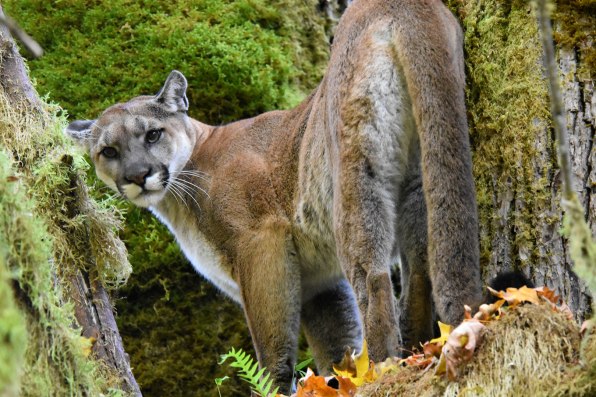
Cougar maps
Tracking cougars is key: if scientists can learn where cougars go and how often they find themselves near the highway, that would help them make a case for building a bridge in that location.
Fragmenting nature
Habitat connectivity is crucial to an ecosystem's health. How easily animals can travel between one habitat to another can affect their ability to migrate, breed, and access food and water. Think of it as a living organism. "Anytime you sever a limb, it's going to die without any support," says Elbroch.
When the U.S. built highways across the American landscape, it fragmented nature into smaller chunks of habitat where biodiversity is now shrinking. As apex predators, cougars, in particular, have a major role to play in the ecosystem. Their disappearance may lead to more coyotes, fewer house cats, more rodents, and so on. And when cougars kill a large animal, they leave behind an unfinished carcass for a wide range of animals, from eagles to bears to beetles, to pick at. "It just ripples through the ecosystem," says Elbroch.
The problem is, many cougars are now virtually stuck on the Olympic Peninsula. Hemmed in by Interstate 5 to the west and U.S. Route 12 to the south, they are cut off from natural breeding partners in the Cascade mountains. Bridges would help increase connectivity and also reduce the roadkill created by the one to two million collisions caused by wildlife every year.
Animal crossing
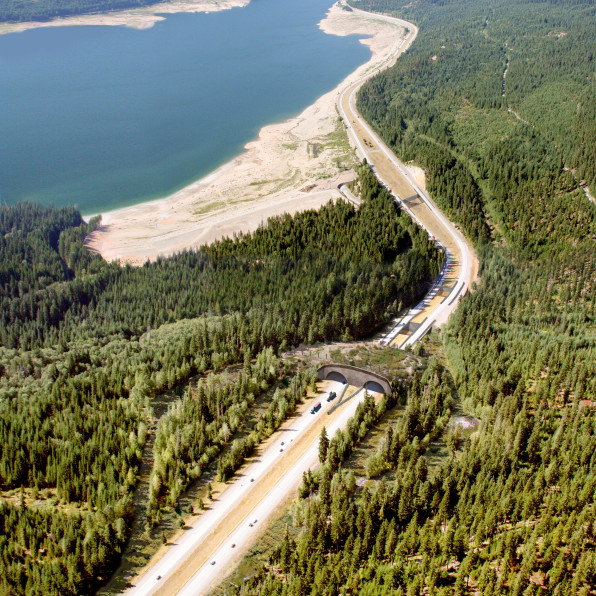
According to a study published last year in the scientific journal Land, highways should have an "ecological crossing" every mile. This may seem ambitious, but it's already being done along a 15-mile stretch of Interstate 90. The project has been going on since the late 1990s with about 11 structures built to date. Most of them are underpasses, but just last year, the Washington Department of Transportation (WDOT) completed the Keechelus Lake Overcrossing, a two-arch bridge spanning a six-lane highway, and flanked by eight-foot-high sound walls to protect the animals. "This is a living classroom," says Glen Kalisz, a habitat connectivity biologist with the WDOT. As of November 2021, 14,000 animals had been documented using the various underpasses along I-90 and the Keechelus Lake Overcrossing.
Unsurprisingly, such infrastructure projects come at a cost. Kalisz says a decently sized underpass, about 20 by 10 feet wide, would cost $2 million. Meanwhile, the Snoqualmie Pass Bridge, currently nearing construction along I-90, has been priced at $6.2 million. At this rate, assuming the White House would divvy up the $350 million across many states, Kalisz expects only $1 million-$2 million to make it to Washington, but he says there are other sources of funding, including multi-billion federal grants.
For now, however, no one knows how the funds are going to be distributed. "That is why we need to take a couple of years and build the case for I-5," says Kalisz. "In my opinion, it's a top priority because it cuts off so much habitat." Even a single bridge would make a difference. "If we put one in and give it a bit of fencing, it would get an insane amount of use and it would be better than it's ever been since this road was built," he says.
Naturally, though, he says "ten would be way better."

Comments
Post a Comment